
PRESENTATION ARCHIVE
- Video
- PDH Certificate
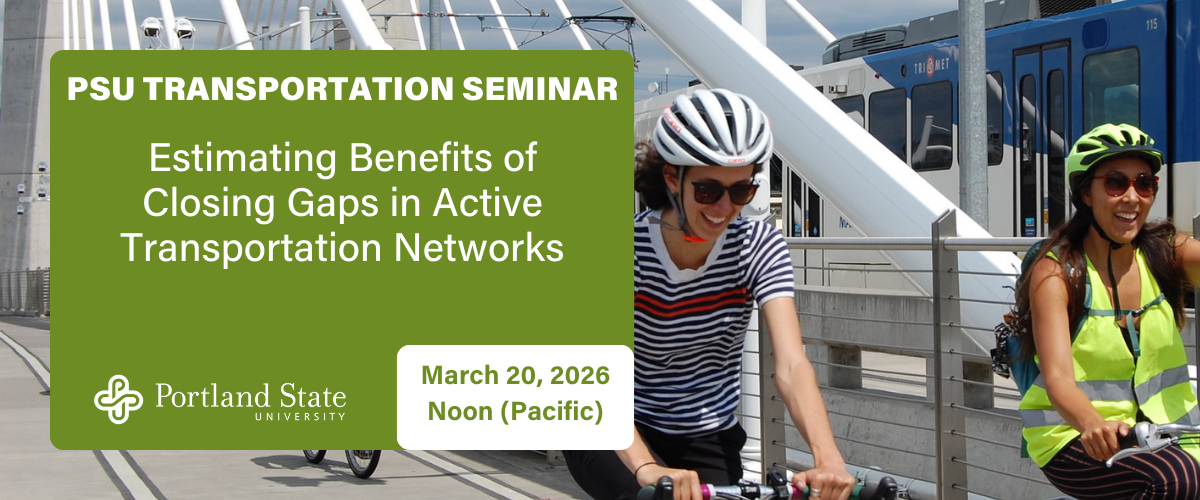
Explore brand-new research from NCHRP Research Report 1149, "Estimating Benefits of Closing Gaps in Active Transportation Networks: A Guide." This NCHRP project produced a step-by-step guide for estimating the benefits of closing gaps in active transportation facilities. The guide was designed for use by practitioners and includes different approaches for different levels of resource availability and expertise. Read more about the research here.
KEY LEARNING OUTCOMES
- Gaps in active transportation networks. What is a gap and who does it affect?
- Behavior change: How does transportation behavior change after an active transportation gap is closed?
- Benefits: What are the best practices for monetizing the health, safety, emissions, and local economic benefits of active transportation projects?
- Communication: What are effective approaches for communicating the benefits tailored to different audiences (i.e., decision makers, practitioners, community members, etc.)?
 SPEAKERS
Mike Sellinger, Senior Planning Associate at Alta Planning + Design
Mike Sellinger is a transportation planner with a background in active transportation planning and research. He was Principal Investigator for NCHRP 1149, and has worked with dozens of communities to secure grant funding for active transportation projects through evaluating their benefits. Mike has a Master of Urban and Regional Planning from Portland State University.
David Wasserman, Civic Analytics Leader at Alta Planning + Design
David is Alta’s National Civic Analytics Leader, specializing in research and data-driven planning for active and multimodal transportation. He applies scientific computing, spatial analysis, and scenario-focused storytelling to support community-centered transportation solutions. David leads and contributes to active transportation research, including projects for Utah’s UTRAC program developing mode shift tools, NCHRP studies on digitizing active transportation facilities, and research on evaluating the benefits of active transportation gap closures.
Joe Broach, Adjunct Research Associate, Transportation and Education Center at Portland State University
Joe Broach is a research associate at the Transportation Research and Education Center (TREC) at Portland State University (PSU) and a Senior Researcher and Modeler at Metro, Portland’s MPO. He has more than 15 years of experience in transportation research and planning, in both academic and public agency settings. His work on non-motorized transportation modeling, behavior, and data has been widely published, incorporated into federal guidance, and used in regional travel models. He holds a PhD in Urban Studies from Portland State University and a Master’s in Economics from the University of Montana, Missoula.
Jessica Schoner, Senior Associate at Fehr & Peers
Dr. Jessica Schoner (she/they), Senior Associate with Fehr & Peers, is a transportation researcher, planner, and data scientist. She uses GIS and statistics to help federal, state, regional, and local agencies answer critical questions about the effects of infrastructure and the built environment on travel behavior, physical activity, health, and safety outcomes. Dr. Schoner’s latest work has focused on research and applications of systemic safety analysis for vulnerable road users, roadway design to increase pedestrian and bicyclist safety, and transportation needs assessment for disadvantaged communities.
PROFESSIONAL DEVELOPMENT
This 90-minute seminar is eligible for 1.5 hours of professional development credit for AICP (see our provider summary). We can provide an electronic attendance certificate for other types of certification maintenance.
Portland State University's Transportation Research and Education Center (TREC) is a multidisciplinary hub for all things transportation. We are home to the Initiative for Bicycle and Pedestrian Innovation (IBPI), the data programs PORTAL and BikePed Portal, the Better Block PSU program, and PSU's membership in PacTrans, the Pacific Northwest Transportation Consortium. Our continuing goal is to produce impactful research and tools for transportation decision makers, expand the diversity and capacity of the workforce, and engage students and professionals through education, seminars, and participation in research. To get updates about what's happening at TREC, sign up for our monthly newsletter or follow us on social media.


