 |  |  |

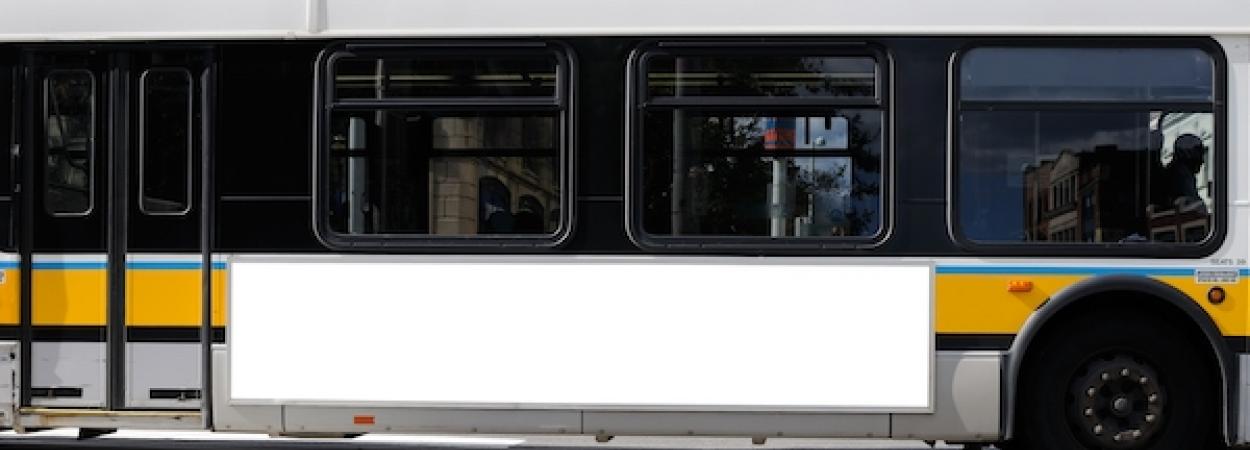
We're proud to announce the publication of a new NITC dissertation: "Methodologies to Quantify Transit Performance Metrics at the System-Level," by Travis Glick of Portland State University.
Performance metrics have typically focused at two main scales: a microscopic scale that focuses on specific locations, time-periods, and trips; and, a macroscopic scale that averages metrics over longer times, entire routes, and networks. When applied to entire transit systems, microscopic methodologies often have computational limitations while macroscopic methodologies ascribe artificial uniformity to non-uniform analysis areas. These limitations highlight the need for a middle approach. This dissertation presents a mesoscopic analysis based around timepoint-segments, which are a no…
Read More
Our multi-year study on automated transit fare collection offers a key finding that won't surprise you: Despite the convenience, the rush toward cashless fare systems has created barriers for lower-income riders seeking to use transit. Results from focus groups, surveys, and a review of current transit agency practices suggest that continuing to accept cash is a crucial way to keep transit accessible. However, dealing with cash has drawbacks: it’s time intensive and expensive. Using a detailed cost-benefit model, the researchers explored the costs for agencies to maintain some cash options and found that some simple approaches can be quite effective. The best bang for the buck? Cash collection on board buses.
Launched in 2019, the research project "Applying an Equity Lens to Automated…
Read More
This story is adapted from two sources; a story published by the Center for Transportation Studies and one from a 2007 Oregon Transportation Research and Education Consortium (OTREC) newsletter.
Transportation research and education has had a long, rich history at Portland State University. Looking back on that history, TREC is celebrating the achievements of an early advocate for transportation studies on the PSU campus: Dr. Walter H. Kramer.
PSU is a national leader in transportation studies and research, with TREC - the Transportation Research and Education Center - serving as the interdisciplinary hub connecting urban planning, civil engineering, and other disciplines to mobility. We take full advantage of our university's location in one of the most innovative transportation networks in the U.S. – Portland, Oregon. Since 2005 we have also led a collaborative, f…
Read More
Last month, Portland State University announced the 2021 awards for faculty and staff excellence for research, graduate mentoring and research administration. The awards are among the university's highest honors. The 2021 Presidential Career Research Award recipient is Jennifer Dill. Dill is a professor in the Nohad A. Toulan School of Urban Studies and Planning, Director of the Transportation Research & Education Center at PSU, and Director of the National Institute for Transportation and Communities, a national university transportation center funded by the U.S. Department of Transportation.
TREC Communications Director Cait McCusker interviewed Dr. Dill last week to learn more about the origin and trajectory of her career in transportation rese…
Read More
See the full, original article "PSU Announces Recipients of Prestigious University Research and Mentoring Awards", authored by Shaun McGillis, Research and Graduate Studies, PSU. Below is an excerpt:
Portland State University announces the 2021 awards for excellence for research, graduate mentoring and research administration. The awards are among the university's highest honors. They recognize and incentivize PSU faculty and staff excellence in research, scholarship, artistry and dedication to PSU students.
Recipients of the awards are some of the most dynamic faculty and staff members at PSU. Colleagues submit nominations; a jury of peers selects awardees based…
Read More
| | |